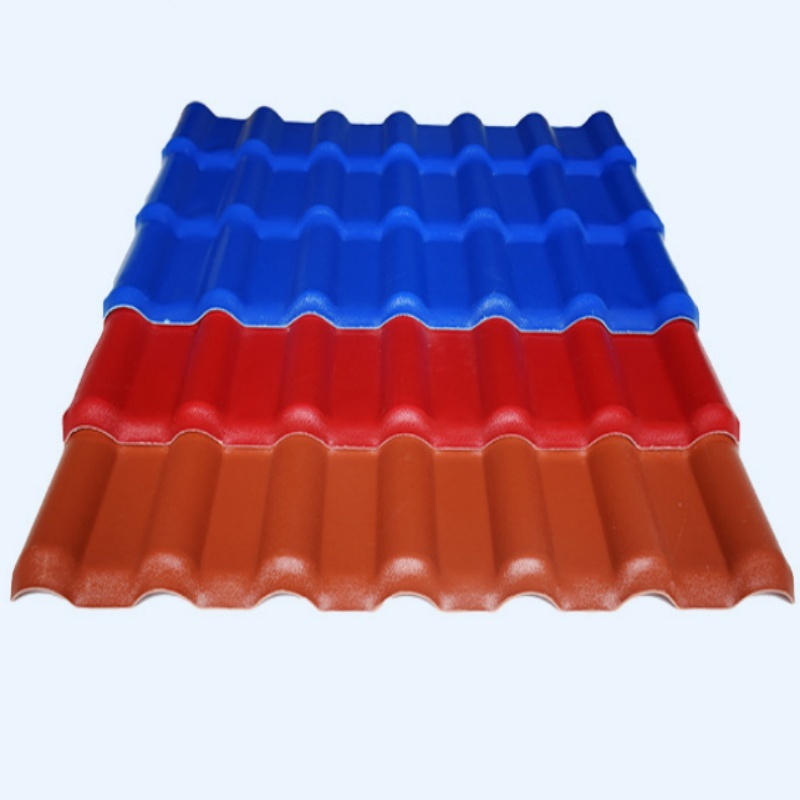
Synthetic Resin Roofing Tile, commonly known as "Resin Tile", is an environmentally friendly roofing building material extruded, calendered, or compression-molded with synthetic resins such as PVC (Polyvinyl Chloride) and ASA (Acrylonitrile-Styrene-Acrylate) as core raw materials. Its core positioning is "a cost-effective alternative to traditional tiles, combining durability, decorativeness, and easy installation".
I. Core Definition & Material Properties
Base material: Based on PVC resin, with high-end models coated with an ASA weather-resistant layer. Free of harmful substances like heavy metals, complying with domestic and international standards such as GB/T 14683 and CE.
Form: Mostly corrugated tiles (common trapezoidal waves, arc waves) or flat tiles. Thickness typically ranges from 2.0mm to 3.0mm, with regular single-sheet dimensions suitable for roof laying.
Core physical properties: Density is only 1/10 of clay tiles and 1/2 of color steel tiles, lightweight. High toughness, resistant to wind loads (can withstand level 12 typhoons) and snow pressure, not easy to break.
II. Key Core Advantages
Superior Weather Resistance & Durability: The ASA surface can resist UV rays, acid rain, and salt spray erosion. Stable use in environments from -30℃ to 70℃, with a service life of 25-30 years, no fading or aging.
Excellent Waterproofing & Sound Insulation: The seamless lap design of tiles ensures outstanding waterproof performance. The material itself has certain sound insulation effect, reducing rain impact noise.
Easy & Efficient Installation: Lightweight, no heavy hoisting equipment required, can be laid manually. Complete supporting accessories adapt to different roof slopes, with short construction cycles.
Environmental Protection & Diverse Aesthetics: Recyclable, meeting green building material requirements. Rich colors (brick red, dark green, gray, etc.) and high simulation shapes, suitable for various architectural styles.
III. Common Specifications & Differentiating Features
Regular dimensions: Effective width 880mm/1050mm, length can be cut on demand (maximum support 6m); wave height 20mm/25mm, etc.
Type classification: Divided by material into PVC resin tiles (economic grade) and ASA resin tiles (high-end grade with better weather resistance); divided by use into roofing tiles, wall tiles, and decorative tiles.
Differences from traditional tiles: Lighter, easier to install, and less likely to be damaged than clay tiles. More weather-resistant, better sound-insulating, and more decorative than color steel tiles. Lower cost and easier to maintain than glazed tiles.
IV. Typical Application Scenarios (Brief)
Covers civil, industrial, agricultural, public building and other fields, such as residential roofing, industrial workshop roofs, agricultural shed roofing, public facility canopies, etc. Detailed application scope has been listed previously, so it is not repeated here.
Would you like me to sort out a Synthetic Resin Roofing Tile core parameters + English comparison manual, including material types, specifications and dimensions, performance indicators and common foreign trade terms, for direct use in product introduction or customer consultation?